
 INJECTABLES
 ORAL
 STEROIDS CYCLE
 SEX PILL
 HGH & PEPTIDES
 FAT BURNERS
 WEIGHT LOSS
 USA WAREHOUSE
 EUROPE WAREHOUSE
No products in the cart.
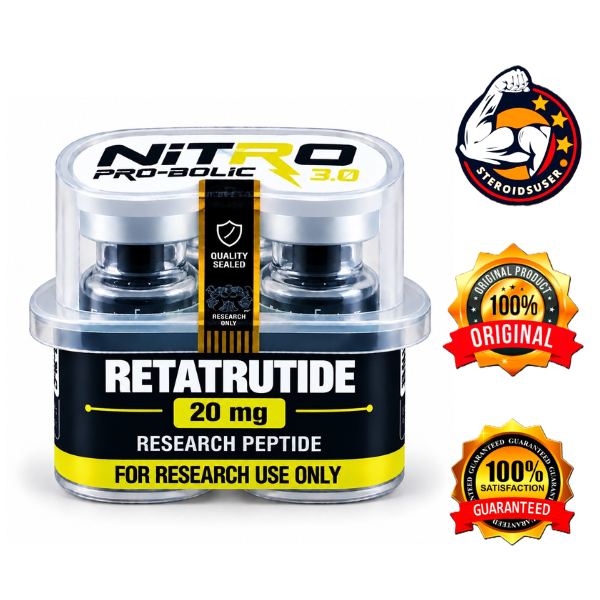
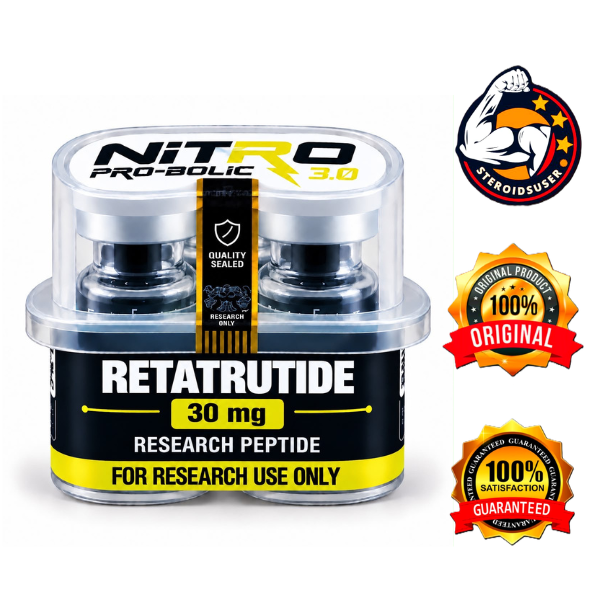
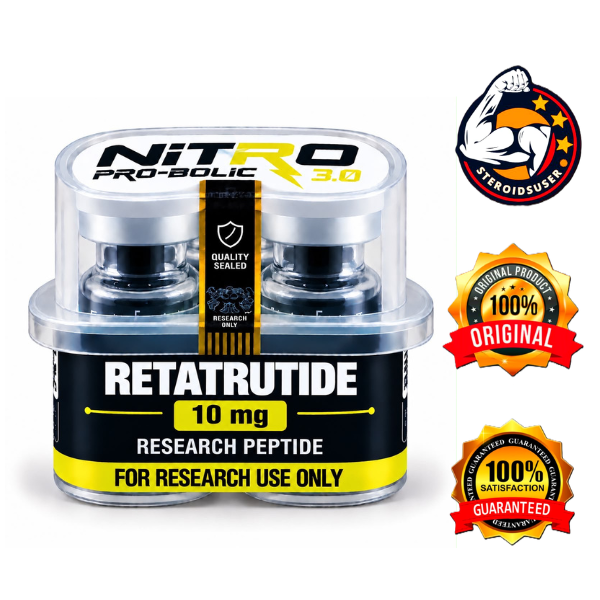
Retatrutide 20mg | Kit with 3mL Bacteriostatic Water – Nitro Probolic
$199.00
Product Name: Retatrutide 20 mg | Research Peptide Kit with 3 mL Bacteriostatic Water
Listed Brand: Nitro Probolic (According to Product Title)
Manufacturer: Not Independently Identified or Verified
Active Compound: Retatrutide
Declared Peptide Content: 20 mg per Vial
Product Form: Research Peptide Powder (Lyophilized Form Not Verified)
Package Size: 2-Vial Kit — 1 × Retatrutide 20 mg Vial + 1 × Bacteriostatic Water 3 mL Vial
Classification: Investigational Synthetic Peptide / Triple Hormone Receptor Agonist
Research Mechanism: Agonism of GIP, GLP-1, and Glucagon Receptors
Research Areas: Obesity, weight management, appetite regulation, glucose metabolism, energy expenditure, and metabolic health.
Scientific Background: Retatrutide is an investigational peptide studied for its activity at three hormone receptor systems involved in metabolic regulation. Human clinical trials have investigated its effects on body weight and metabolic outcomes. These clinical findings do not establish the quality, safety, or effectiveness of independently marketed research peptide kits.
Reported Half-Life: Approximately 6 days according to Finest Gears; not verified for this commercial product.
Medical and Regulatory Status: Retatrutide is identified as investigational in the supplied materials. FDA approval for this commercial kit has not been established, and its long-term safety continues to require evaluation.
Safety Information: Clinical studies have reported gastrointestinal adverse effects, including nausea, vomiting, diarrhea, and constipation. Additional concerns include increased heart rate, dehydration, potential metabolic complications, and uncertainties involving long-term safety.
Product Verification: The supplied descriptions agree on 20 mg retatrutide, a 3 mL bacteriostatic water vial, and a two-vial kit. However, the manufacturer, peptide identity, purity, sterility, formulation characteristics, and batch-specific laboratory documentation have not been independently verified.
Intended Classification: Investigational Research Peptide — Not Approved for Routine Human Administration.
Retatrutide 20 mg – Research Peptide Kit with 3 mL Bacteriostatic Water | Nitro Probolic
1. Product Overview
Retatrutide 20 mg is presented as an investigational research peptide kit under the Nitro Probolic name.
According to the supplied Roidsdeal product title and short description, the kit contains one vial of retatrutide powder with a declared content of 20 mg and a separate vial containing 3 mL of bacteriostatic water.
Retatrutide is an investigational synthetic peptide that activates three hormone receptor systems involved in metabolic regulation: glucose-dependent insulinotropic polypeptide (GIP), glucagon-like peptide-1 (GLP-1), and glucagon.
This triple-receptor mechanism distinguishes retatrutide from compounds that act only on GLP-1 receptors or on both GIP and GLP-1 receptors.
Human clinical studies have investigated retatrutide in relation to obesity, weight management, appetite regulation, glucose metabolism, and metabolic health.
However, clinical trial findings do not establish the identity, quality, safety, or effectiveness of independently marketed research peptide products.
The supplied descriptions do not identify a verified manufacturer for this particular kit.
Its peptide identity, purity, sterility, formulation characteristics, and batch-specific quality documentation remain unverified.
2. What Is Retatrutide?
Retatrutide is a synthetic investigational peptide developed for research involving three hormone receptor systems:
- GIP Receptors: Associated with glucose-dependent insulin secretion and metabolic signaling.
- GLP-1 Receptors: Involved in appetite regulation, glucose-dependent insulin secretion, and gastrointestinal function.
- Glucagon Receptors: Participate in hepatic glucose production, energy metabolism, and other metabolic processes.
The compound’s simultaneous activity at these receptors has attracted scientific interest in obesity and metabolic disease research.
Retatrutide is not an anabolic-androgenic steroid, testosterone derivative, or growth hormone product.
It is also distinct from semaglutide, a GLP-1 receptor agonist, and tirzepatide, a dual GIP/GLP-1 receptor agonist.
Although retatrutide has been evaluated in human clinical studies, its long-term safety and therapeutic role continue to require investigation.
3. How Does Retatrutide Work?
Retatrutide acts through a triple-receptor mechanism involving GIP, GLP-1, and glucagon receptors.
GLP-1 Receptor Activity
GLP-1 receptor activation influences appetite, satiety, glucose-dependent insulin secretion, and gastrointestinal function.
These biological effects contribute to scientific interest in GLP-1-based therapies for obesity and metabolic disorders.
GIP Receptor Activity
GIP participates in glucose-dependent insulin secretion and other metabolic signaling pathways.
Its interaction with GLP-1 receptor activity is an important area of research in multi-receptor metabolic therapies.
Glucagon Receptor Activity
Glucagon receptor signaling influences hepatic glucose production, energy metabolism, and lipid-related pathways.
Research has investigated whether combining glucagon receptor activity with GIP and GLP-1 receptor activation can influence energy expenditure and body-weight regulation.
However, glucagon signaling has complex physiological effects, and its clinical consequences depend on the compound’s overall pharmacological profile.
Combined Receptor Activity
Retatrutide’s triple-receptor mechanism has been investigated as a strategy for influencing appetite, glucose metabolism, and energy balance through complementary pathways.
Clinical studies have evaluated outcomes involving body weight and metabolic measurements.
Individual responses vary, and findings from controlled clinical trials should not be interpreted as guaranteed outcomes from commercial research products.
The exact pharmacokinetic and biological characteristics of the Nitro Probolic kit have not been independently established.
4. Medical Uses & Clinical Information
Retatrutide is an investigational compound studied for potential applications in obesity and related metabolic conditions.
Obesity and Weight Management Research
Human clinical trials have evaluated retatrutide in participants with obesity or overweight.
A published Phase 2 study reported substantial average weight reductions over 48 weeks in certain treatment groups.
According to the supplied Finest Gears description, the highest-dose group studied achieved approximately 24.2% mean weight reduction at 48 weeks.
This figure describes a controlled clinical trial population and must not be presented as an expected result from an independently marketed research peptide vial.
Appetite Regulation
Retatrutide has been investigated for its effects on appetite and food intake through receptor systems involved in metabolic and gastrointestinal signaling.
The magnitude of individual responses may vary.
Glucose Metabolism
GIP and GLP-1 receptor activity contributes to glucose-dependent insulin secretion.
Clinical investigations have examined retatrutide’s potential relevance to glucose regulation, type 2 diabetes, and related metabolic conditions.
These findings do not establish an approved therapeutic indication for this commercial kit.
Energy Expenditure and Lipid Metabolism
Glucagon receptor activity has contributed to research interest in energy expenditure and lipid metabolism.
The relative contribution of each receptor pathway to clinical outcomes remains under investigation.
Clinical Development
The supplied Finest Gears material describes Phase 2 research and subsequent Phase 3 investigations.
Clinical development of an investigational medicine must be distinguished from the regulatory status and quality of independently marketed research peptide products.
No evidence supplied here establishes that this 20 mg kit is equivalent to the formulation used in clinical trials.
5. Product Specifications & Packaging
| Specification | Details |
|---|---|
| Product Name | Retatrutide 20 mg Research Peptide Kit |
| Listed Brand | Nitro Probolic |
| Manufacturer | Not Specified or Independently Verified |
| Active Compound | Retatrutide |
| Compound Type | Synthetic Investigational Peptide |
| Pharmacological Classification | Triple Hormone Receptor Agonist |
| Receptor Target 1 | GIP |
| Receptor Target 2 | GLP-1 |
| Receptor Target 3 | Glucagon |
| Declared Peptide Content | 20 mg per Vial |
| Physical Form | Powder; Lyophilized Form Unverified |
| Package Presentation | 2-Vial Kit |
| Vial 1 | Retatrutide Powder, 20 mg |
| Vial 2 | Bacteriostatic Water, 3 mL |
| Product Category | Research Peptides |
| Reported Half-Life | Approximately 6 Days — Source-Reported |
| Human Therapeutic Status | Investigational |
| FDA Approval of Commercial Kit | Not Established |
| Batch-Specific Testing | Not Provided |
| Purity and Sterility | Not Independently Verified |
The supplied Roidsdeal and Finest Gears descriptions agree on the active compound, declared 20 mg peptide content, 3 mL bacteriostatic water volume, and two-vial presentation.
However, the manufacturer identity and physical formulation require confirmation.
No authenticated manufacturer documentation, batch-specific certificate of analysis, or sterility evidence has been provided.
6. Research Use & Clinical Supervision
Retatrutide is described as an investigational peptide.
The inclusion of bacteriostatic water does not establish that the product is approved or suitable for self-administration.
The declared 20 mg content identifies the total amount of peptide reportedly contained in the vial. It does not represent an established single treatment dose.
Clinical studies use defined protocols, eligibility criteria, investigational formulations, and medical monitoring.
These clinical trial procedures cannot automatically be transferred to independently marketed research products.
No FDA-approved dosing regimen or routine treatment instructions have been established for this commercial kit in the supplied materials.
Research involving investigational peptides requires appropriate scientific oversight, verified material identity, and compliance with applicable laboratory and regulatory requirements.
The supplied descriptions do not establish validated reconstitution instructions, post-reconstitution stability, or verified administration guidance.
7. Possible Side Effects & Safety Limitations
Human clinical studies of retatrutide have reported adverse effects, particularly involving the gastrointestinal system.
Reported adverse effects include:
- Nausea
- Vomiting
- Diarrhea
- Constipation
- Other gastrointestinal discomfort
Gastrointestinal tolerability has been an important consideration in clinical development.
Additional safety concerns and uncertainties include:
- Increased heart rate observed in clinical research
- Dehydration associated with significant gastrointestinal symptoms
- Potential changes in glucose regulation
- Uncertain long-term cardiovascular outcomes
- Pancreatic and gallbladder-related risks requiring further investigation
- Potential hypersensitivity or immunogenic reactions
- Unknown long-term effects of sustained triple-receptor activation
- Risks associated with peptide impurities or contamination
Some concerns reflect known issues with related metabolic therapies or potential risks under investigation rather than established adverse reactions specific to retatrutide.
The frequency and severity of adverse events depend on clinical study conditions and individual characteristics.
The safety profile of an independently marketed research peptide kit cannot be assumed to match that of a clinical trial formulation.
8. Warnings & Precautions
Retatrutide is described as an investigational peptide and should not be represented as an approved treatment for obesity, diabetes, or other metabolic conditions without current regulatory confirmation.
Clinical trial findings do not establish the safety or effectiveness of independently marketed commercial research products.
The safety of retatrutide during pregnancy, breastfeeding, childhood, and adolescence has not been adequately established.
Potential interactions with other medications, particularly those affecting glucose metabolism, require clinical evaluation.
Individuals with significant gastrointestinal disorders or underlying medical conditions may face additional risks from compounds influencing gastrointestinal and metabolic signaling.
The presence of bacteriostatic water does not establish that the peptide is sterile, pharmaceutically authorized, or suitable for injection.
Product identity, purity, manufacturing quality, and batch-specific documentation require independent verification.
Research-use labeling does not remove applicable regulatory requirements or establish product safety.
9. Storage & Handling
Retatrutide is described as a powdered research peptide supplied separately from bacteriostatic water.
Verified manufacturer storage temperatures, stability data, and expiration requirements have not been provided.
Peptide stability depends on formulation, packaging, and environmental conditions.
Specific storage requirements should be established through authentic manufacturer documentation.
The bacteriostatic water should have verified labeling, composition, expiration information, and storage instructions.
The supplied descriptions do not establish validated compatibility or stability after combining the peptide with the included liquid.
No product-specific reconstitution or post-reconstitution storage instructions can be confirmed.
Keep research materials in their original, clearly identified packaging and away from children and pets.
Materials with uncertain identity, compromised packaging, or unverified storage history should not be assumed suitable for laboratory or human use.
10. Frequently Asked Questions (FAQs)
Q1: What is Retatrutide?
Retatrutide is an investigational synthetic peptide that activates GIP, GLP-1, and glucagon receptors involved in metabolic regulation.
Q2: How much Retatrutide is included in the kit?
The supplied descriptions identify one vial containing 20 mg of retatrutide powder.
Q3: What else is included in the package?
A separate vial containing 3 mL of bacteriostatic water, making the presentation a two-vial kit.
Q4: Is Retatrutide the same as Semaglutide or Tirzepatide?
No. Retatrutide activates GIP, GLP-1, and glucagon receptors. Semaglutide primarily activates GLP-1 receptors, while tirzepatide activates GIP and GLP-1 receptors.
Q5: Is Retatrutide FDA-approved?
The supplied descriptions identify retatrutide as investigational. FDA approval has not been established for this commercial research kit. The current regulatory status of the investigational compound should be checked separately before publication.
Q6: Does this kit have clinically proven weight-loss effectiveness?
No product-specific clinical evidence has been supplied for this kit. Results from retatrutide clinical trials cannot be assumed to apply to an independently marketed research product.
11. Conclusion & Medical Disclaimer
Retatrutide 20 mg is presented as an investigational research peptide kit containing one vial of retatrutide powder and a separate 3 mL vial of bacteriostatic water.
The compound has attracted scientific interest because of its triple-receptor activity involving GIP, GLP-1, and glucagon.
Human clinical trials have investigated its effects on obesity, appetite regulation, glucose metabolism, and related metabolic outcomes.
However, these findings do not establish the quality, safety, or therapeutic effectiveness of this particular commercial product.
The manufacturer identity, peptide purity, sterility, formulation characteristics, and batch-specific laboratory documentation require independent verification.
Research Use Only: Not intended for human self-administration or for the diagnosis, treatment, prevention, or cure of any disease.
This information is provided for educational and scientific product-identification purposes only and does not constitute medical advice.
Related products
-12%
Original price was: $170.00.$149.00Current price is: $149.00.
-26%
Out of stock
-19%
Out of stock
-26%

Out of stock
-11%
Out of stock
Original price was: $180.00.$160.00Current price is: $160.00.
-13%
Original price was: $160.00.$139.00Current price is: $139.00.
-24%
Out of stock
Original price was: $195.00.$149.00Current price is: $149.00.
-24%
Out of stock
-24%
Out of stock
-22%
Out of stock
Original price was: $190.00.$149.00Current price is: $149.00.
-17%
Original price was: $180.00.$149.00Current price is: $149.00.
-12%
Out of stock
Original price was: $250.00.$220.00Current price is: $220.00.